
Blog, Dispatches From The Intern Desk
Water Has No Boundaries: Centering Community in Chesapeake Bay Restoration – Dispatches from the CSN Intern Desk
This series explores advanced stormwater programs and their technical foundations, while also featuring conversations with practitioners and spotlighting real-world programs and case studies – offering insights for practitioners, policymakers, young professionals, and students across the Chesapeake Bay region.
Water Has No Boundaries: Centering Community in Chesapeake Bay Restoration
By: Jolette Lima
Featuring: Carmera Thomas-Wilhite, Chesapeake Bay Foundation
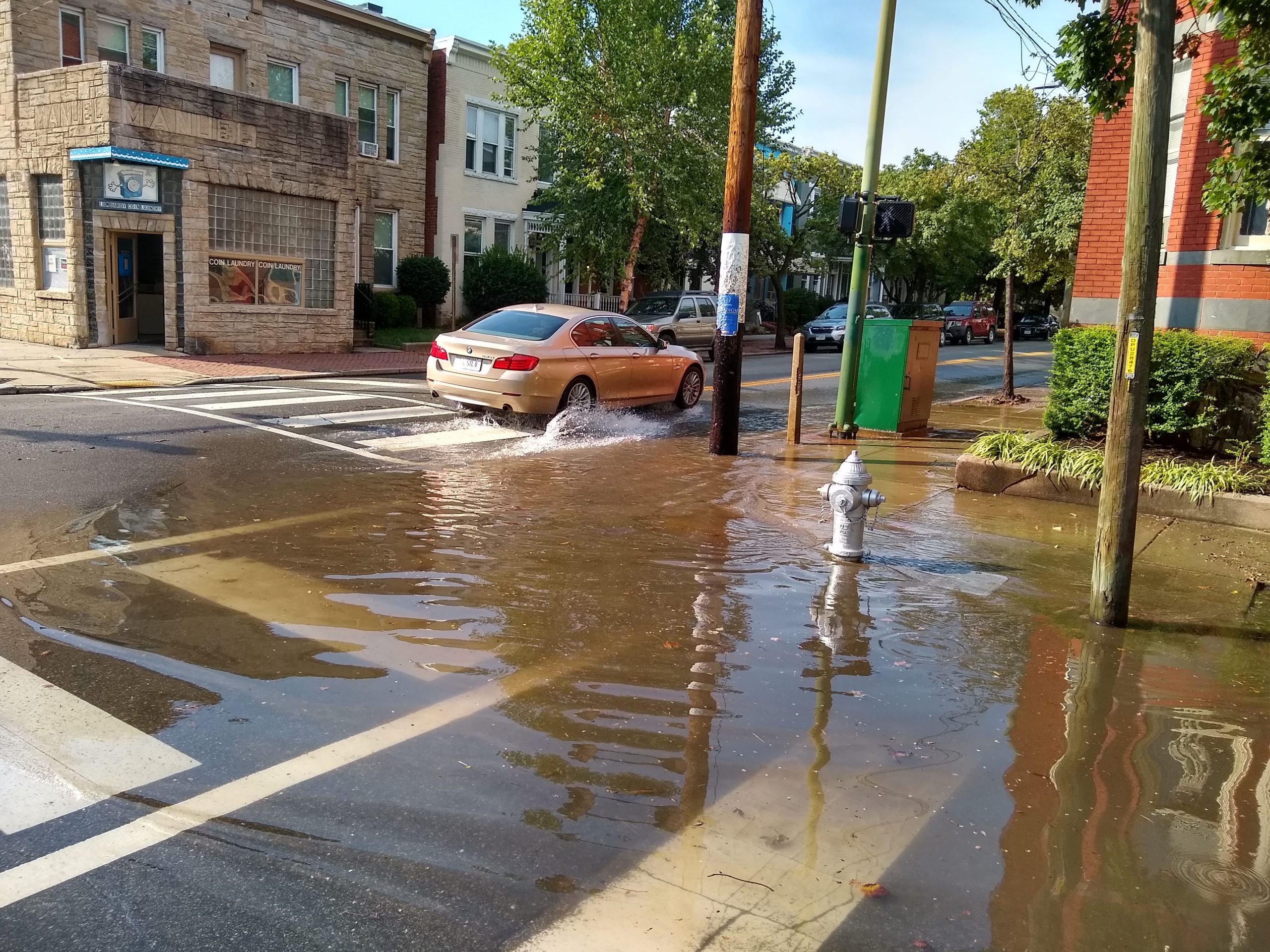
Stormwater runoff is now the fastest-growing source of pollution entering the Chesapeake Bay watershed. As climate change intensifies rainfall, and development increases impervious surfaces, flooding has become more frequent, and more uneven. Across the watershed, historically marginalized neighborhoods face higher flood risks, aging drainage systems, limited tree canopy, and greater exposure to contaminated runoff. Decades of disinvestment and environmental injustices have shaped which communities receive upgrades and which are left to manage repeated flooding on their own.
It’s important to recognize how environmental progress and environmental justice are inseparable. The health of the Bay is directly tied to the health of the communities that live beside it.
Centering Community in Restoration
For Carmera Thomas-Wilhite, Vice President for Communities and Partnerships at the Chesapeake Bay Foundation, watershed restoration begins with people.
Her career has included urban conservation, stewardship, advocacy, and coalition building, focusing on elevating community voices across the region. Growing up gardening with her grandparents and playing outside shaped her love of science and the outdoors. But it was her work in Baltimore, particularly in neighborhoods like Park Heights, that deepened her understanding of environmental inequity.
“Having nature is healing,” she said. “And a lot of people don’t have that experience.”
As a Black woman working in conservation, Thomas-Wilhite has witnessed how access to green space, clean water, and flood protection varies dramatically by zip code. She notes that representation in environmental work has evolved over time. “I used to say that there weren’t many of us in conservation,” she reflected. “But I think that has changed so much.”
Her leadership reflects that shift, and it ensures restoration efforts reflect the lived experiences of the 18 million people who call the watershed home.
In Baltimore, residents along Hillen Road had experienced repeated flooding and basement backups for decades. Cars were lost, property was damaged and insurance claims mounted. In 2018, Thomas-Wilhite and colleagues gathered testimony from residents and elevated those stories to city and state leaders.
When those experiences were presented before policymakers, funding was allocated to study the stormwater drainage system and examine infrastructure gaps. For Thomas-Wilhite, this is what accountability looks like: listening first, then leveraging advocacy, partnerships, and policy tools to pursue structural solutions.
“It’s not just up to one organization,” she said. “Community being at the center, but all of us working together, is really key.”
Community-centered restoration also means listening to Indigenous and tribal communities whose stewardship practices long predate modern watershed policy. Thomas-Wilhite emphasized that Indigenous cultures approach land and water through reciprocity, taking only what is needed and recognizing an obligation to give back. Traditional ecological knowledge, alongside scientific data and modeling, strengthens restoration efforts rather than competing with them.
Environmental Justice Is Watershed Work
Stormwater pollution doesn’t stop at city or county lines. Inland flooding connects to coastal flooding and development upstream affects communities downstream. When rain falls on rooftops, highways, and parking lots, it gathers speed and pollutants as it travels, carrying sediment, trash, oil, and nutrients into neighborhood streams before eventually flowing into larger rivers and, ultimately, the Chesapeake Bay.
As climate change intensifies rainfall and development continues to replace forests and fields with impervious surfaces, the volume and velocity of runoff increase. Aging storm drains and undersized pipes, often concentrated in historically under-resourced communities, are forced to manage more water than they were designed to hold. The result is flooded streets, overwhelmed sewer systems, basement backups, and contaminated waterways.
“Water has no boundaries,” Thomas-Wilhite emphasized. “Every jurisdiction has to play a role.”
Because water ignores political boundaries, solutions must do the same. Addressing stormwater in one neighborhood while neglecting the surrounding watershed only shifts the burden. True resilience requires coordination across municipalities, counties, and states, recognizing that the health of upstream communities directly shapes the safety and stability of those downstream.
Through partnerships, legislative advocacy, and coalition-building, CBF works alongside local organizations, youth leaders, and community groups to ensure restoration efforts are equitable as well as effective.
In Maryland, organizations like the Blacks of the Chesapeake are reconnecting Black communities to maritime heritage while advancing coastal resilience education in Annapolis and on the Eastern Shore. Minorities in Aquaculture is elevating women and people of color within the fishing and oyster industries, strengthening both economic opportunity and the long-term sustainability of working waterfronts. In Baltimore, urban farming networks and Black-led food sovereignty initiatives are linking land stewardship, stormwater management, and community resilience.
Environmental justice strengthens the study of watershed science. Infrastructure upgrades, green stormwater solutions, and tree canopy investments reduce pollution loads while also reducing flood risk and heat exposure in frontline neighborhoods.
A Year-Round Commitment
While Black History Month offers an opportunity to reflect on leadership and resilience, Thomas-Wilhite’s work and the broader push for community-centered restoration continues year-round. The future of the Bay depends on more than nutrient reductions and sediment targets. It depends on trust, accountability, and ensuring that every community benefits from investment in green infrastructure.
Stormwater may be the fastest-growing source of pollution in the watershed. But community partnership may be the most powerful solution.
Water has no boundaries, so restoration efforts shouldn’t either
Add Your Heading Text Here
Latest Resources
View All ResourcesDeveloped by the Virginia Department of Conservation and Recreation, this design specification (updated 2013) provides guidance on disconnecting rooftop runoff...
Developed by the Virginia Department of Conservation and Recreation, this design specification (Version 1.9, March 1, 2011) provides guidance on...
Developed by the Virginia Department of Environmental Quality, this design specification (Version 2, 2013) provides guidance on using grass channels...