

Bioretention
Thoughtful design to capture stormwater
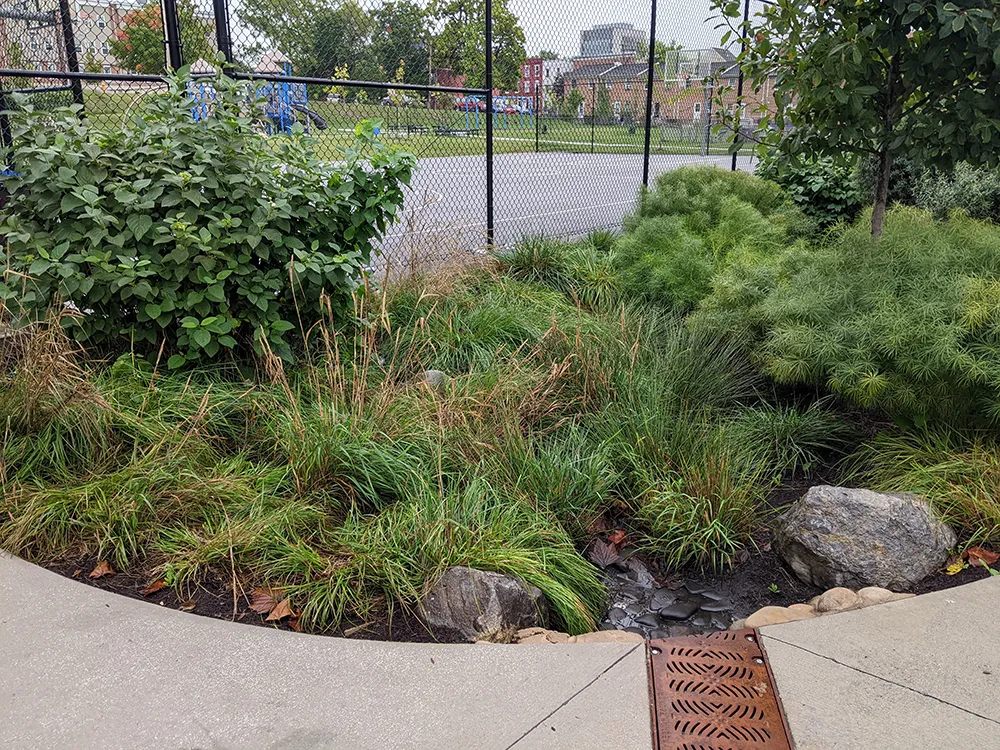
Bioretention areas – such as rain gardens – use engineered soil, mulch, and native plants to capture, filter, and infiltrate stormwater.
Because of the variety of potential bioretention designs, they can be used as a landscape amenity – with routine landscaping maintenance. They are feasible on most sites with less than one acre of contributing drainage area.
5 Things to Know About Bioretention:
- Bioretention is feasible on most sites with less than one acre of contributing drainage area
- There are many versatile design adaptations to allow bioretentions to be implemented over a wide range of development intensity (rural to ultra-urban)
- They have been widely researched both in lab and field settings, and have a proven pollutant removal capability
- When well maintained, and designed with a thoughtful plant palette, they can be a landscape amenity. With improper maintenance or education, they can also end up as an eyesore.
- They require routine landscaping maintenance to prune and replace plants, remove invasives, and maintain soil and mulch condition.
Related Resources
View All ResourcesDeveloped by North Carolina State University Cooperative Extension, this guidance document (Urban Waterways Journal, 2009) provides design recommendations for incorporating...
Design Spec
Design Spec: Bioretention, 2013Developed by the Virginia Department of Conservation and Recreation, this design specification (Version 2.0, 2013) provides guidance on designing bioretention...