

Intro to Stormwater
When rain falls, where does it go?
If it lands on a meadow or forest, much of that water will soak into the soil, feeding back into the water cycle. In agricultural areas, the rain might pick up nutrients from fertilizers or excess sediment from farm fields before rejoining a nearby stream. Precipitation over urban areas is likely to hit a lot of hard, impervious surfaces, such as rooftops, parking lots, and roadways. This precipitation might pick up pollutants from litter, pet waste, cars, and chemical contaminants before entering a storm drain.
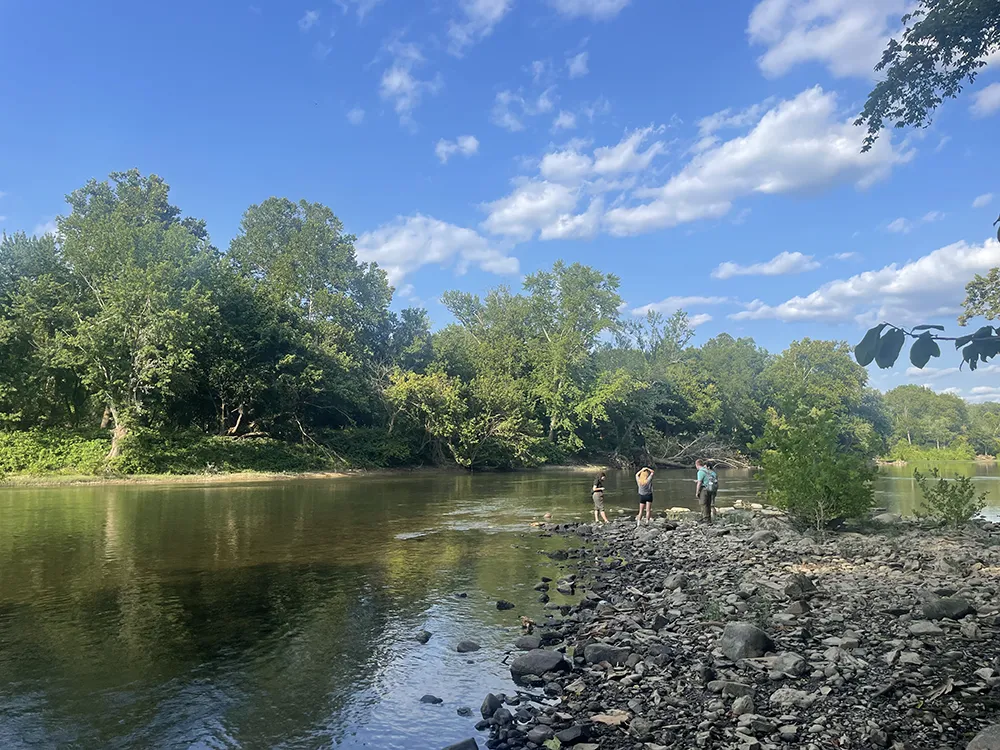
Stormwater runoff is precipitation that does not soak into the ground or evaporate into the air and instead flows over impervious surfaces before entering the nearest waterway. As this runoff moves across the landscape, it can create serious challenges for communities and ecosystems.
Polluted stormwater degrades clean water by carrying nutrients, sediment, and contaminants into local streams and the Chesapeake Bay. The large volumes and fast-moving flows generated by impervious surfaces can overwhelm drainage systems, leading to flooding in neighborhoods, roads, and businesses. Over time, this increased runoff also erodes stream banks, pollutes rivers, and damages wetlands, threatening the habitats that fish, wildlife, and plants depend on.
Stormwater management is driven by rainfall: where, when, and how it falls. We use best management practices (BMPs) to help mitigate the effects of stormwater runoff by slowing it down and spreading it out. Combined with smart watershed planning, and education and outreach, BMPs play an important role in keeping pollution from entering our waterways.
Related Resources
View All ResourcesThis fact sheet introduces the basics or urban hydrology including key terms and landscape and watershed essentials.