
Best Management Practices
These practices are generally designed to do one of three things:
-
Restore natural landscapes (tree BMPs, stream, wetland and shoreline restoration)
-
Mimic natural landscapes (bioretention, infiltration, ponds, etc)
-
Change behavior to address the source of an issue (IDDE, street sweeping, UNM)
On a large scale, these practices can look like green roofs, bioretention systems, pervious pavement, or restored shorelines. At a residential level, they may look like rain gardens, conservation landscapes, or rain barrels. Combined with smart watershed planning, education, and outreach, BMPs play an important role in keeping pollution from entering our waterways.
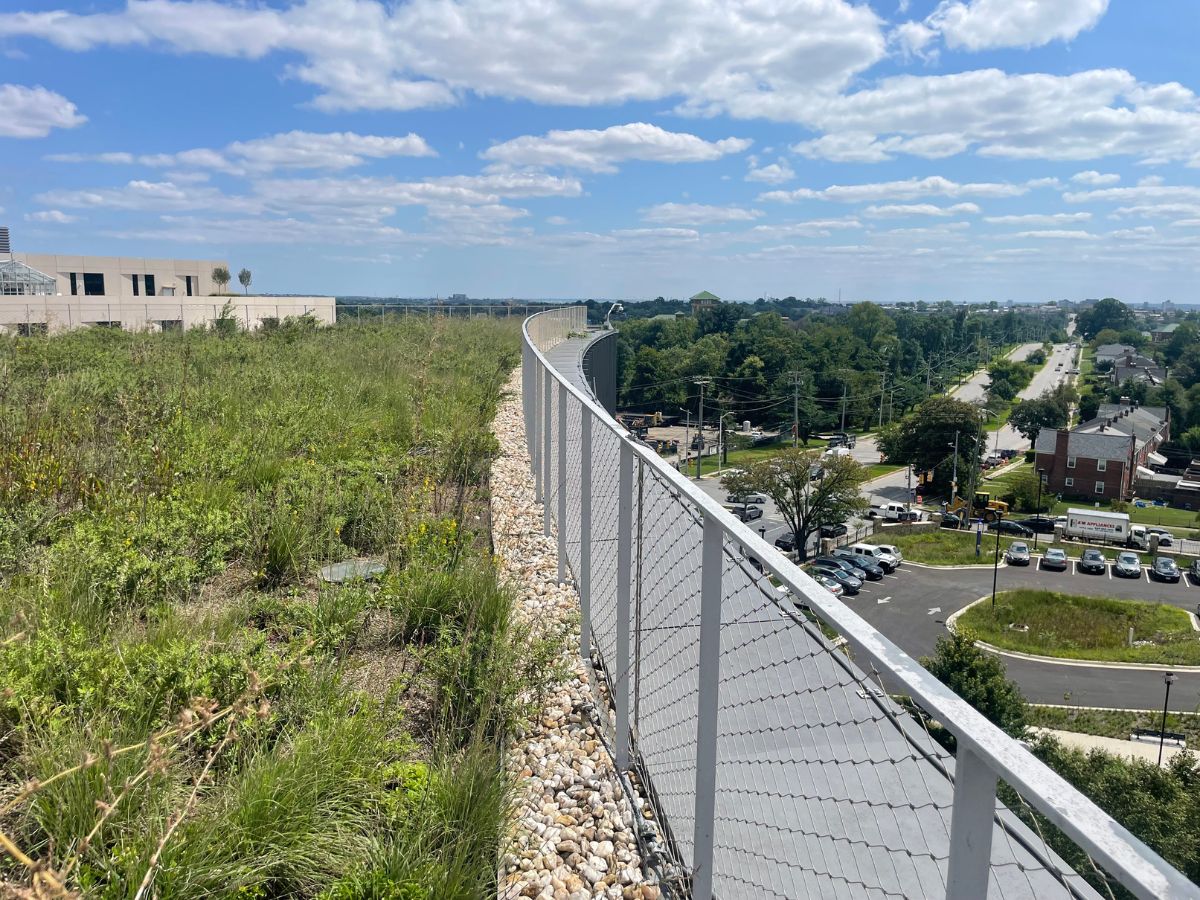
BMPs, which are sometimes called stormwater control measures (SCMs), stormwater management practices, or green infrastructure, can take many different forms:
1. Runoff Disconnection
2. Bioretention
3. Infiltration
4. Filters
5. Swales
6. Permeable Pavement
7. Wet and Extended Detention Stormwater Ponds
8. Landscape-scale restoration practices
a. Stream Restoration
Stream restoration stabilizes eroding banks, improves in-stream habitat, and reconnects streams to their floodplains. These projects can be technically complex, and require great care in selecting appropriate sites. They are highly visible and can be a community amenity, but only when done with early and meaningful community engagement. These projects can also be expensive, and require time for permitting and construction.
b. Reforestation/Riparian Buffers
Riparian buffers are vegetated areas – typically forest – planted along waterways to intercept runoff, stabilize banks, and filter nutrients. Reforestation involves planting trees and native vegetation to improve watershed resilience and restore natural hydrology.
c. Constructed Wetlands
Constructed wetlands are engineered shallow basins planted with wetland vegetation and have deeper areas providing storage capacity for stormwater. They provide excellent pollutant removal and habitat, but can be difficult to maintain long term.
d. Shoreline Restoration
Shoreline restoration uses living shorelines and other natural features to stabilize eroding coasts, reduce nutrient inputs, and improve habitat. These projects restore natural water-land interfaces while providing a buffer against storms.
9. Municipal Program BMPs
a. Street Sweeping
Street sweeping removes sediment, debris, and pollutants from road surfaces before they can enter storm drains.
b. Urban Nutrient Management
Urban nutrient management reduces excess fertilizer use on lawns, parks, and other managed landscapes through planning, soil testing, and education. This prevents nitrogen and phosphorus from washing into local waters.
c. Advanced IDDE Programs
Advanced IDDE programs go above and beyond MS4 permit requirements to locate and eliminate nutrient-rich discharges – such as sewage or industrial waste – entering storm drains. They rely on proactive monitoring, mapping, and rapid response to protect water quality.
Related Resources
View All ResourcesDeveloped by the Chesapeake Stormwater Network, this technical bulletin (2013) provides a detailed, illustrated guide to the construction, inspection, and...
This fact sheet covers the basics of Conservation Landscaping Practices, including definitions, examples, benefits, and computing the pollutant removal credit.