

Uncategorized
Rooftop Disconnection Design Specification
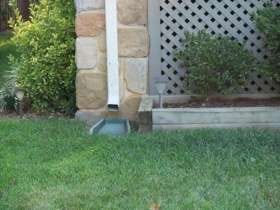
[download id=”45.
The concept of rooftop disconnection has been around for a long time, and credits for doing so have been offered in Maryland since 2000. Many designers and plan reviewers, however, are reluctant to employ this simple environmental site design technique, and feel the rules for disconnection are far too simplistic, frequently abused, and are not very effective for compacted soils. In hindsight, I admit that the original disconnection credit I developed in 2000 needs a major overhaul in order to better address existing soil types and improve the potential for filtering and infiltration after the disconnection is made.
With this is mind, I have released a more advanced design specification for rooftop disconnection with a stronger hydrologic basis. While simple rooftop disconnections are still allowed for sites with exceptionally permeable soils, most disconnections require a supplementary practice to achieve a decent rate of runoff reduction. This can involve compost amended filter paths, micro-infiltration, rain gardens or other measures that increase runoff filtering and/or infiltration between the roof and the street. The amount of actual runoff reduction is dependent on soil type, but in general, is lower than the Maryland disconnection credit.
Comments are invited from the Network on how this specification can be improved. In particular, your thoughts on how localities can quickly confirm whether disconnections shown on stormwater plan actually correspond with what was constructed at the site would be most useful.

Latest Resources
View All ResourcesDeveloped by the Virginia Department of Conservation and Recreation, this design specification (updated 2013) provides guidance on disconnecting rooftop runoff...
Developed by the Virginia Department of Conservation and Recreation, this design specification (Version 1.9, March 1, 2011) provides guidance on...
Developed by the Virginia Department of Environmental Quality, this design specification (Version 2, 2013) provides guidance on using grass channels...