

Uncategorized
BUBBAs History Spotlight: Broad Branch and Linnean Park Tributary (2015)
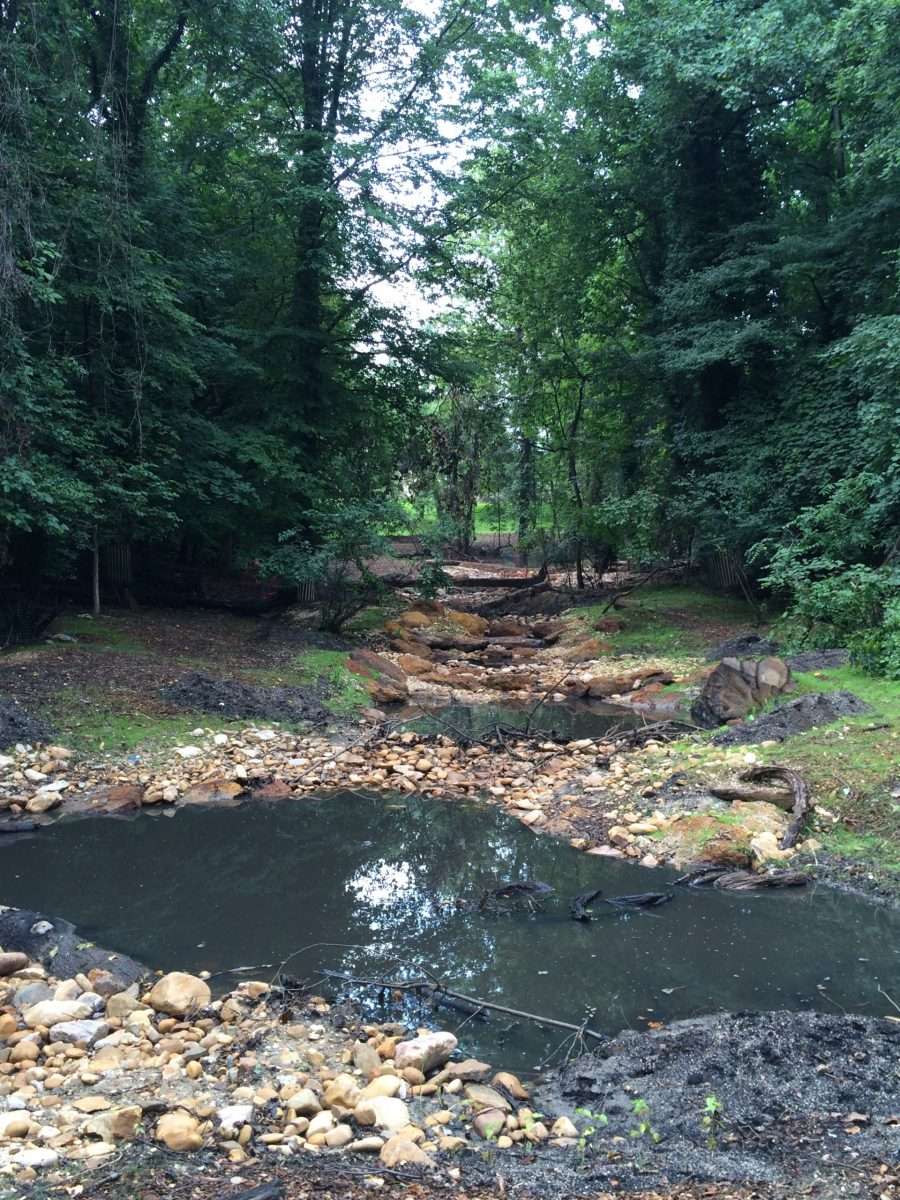
One of the goals of the BUBBAs contest is to shed light on
the best and most innovative restoration projects across the Chesapeake Bay
Watershed. So, it seems only natural that the 2015 BUBBAs Grand Prize went to a
project that shed new light, literally, on a previously buried urban stream in
the District of Columbia.
The restoration of the Linnean Park tributary and
daylighting and restoration of Broad Branch were two linked projects located in
Northwest, Washington DC. The goal of
this effort was to restore in-stream habitat and improve the urban hydrology of
these two tributaries that flow to Rock Creek through a combination of
bioretention, regenerative stream channel (RSC) design, and stream daylighting.
One portion of the project involved daylighting a part of a
stream that was put into a pipe in the mid-1930’s. Daylighting this section of the Rock Creek
watershed recreated riparian habitat in an area that had not had surface stream
for eighty years and created at least a half-acre of new wetlands.
To ensure that the newly-created stream had surface flow
throughout the year and that the stream was clean and healthy, the project also
involved directing stormwater from adjacent streets, alleys, and rooftops into
bioretention cells by creating curb cuts and redirecting storm sewers. These bioretention cells slow, cool, and
filter that stormwater which then recharge the groundwater table thereby providing
an additional source of clean baseflow to the new stream.
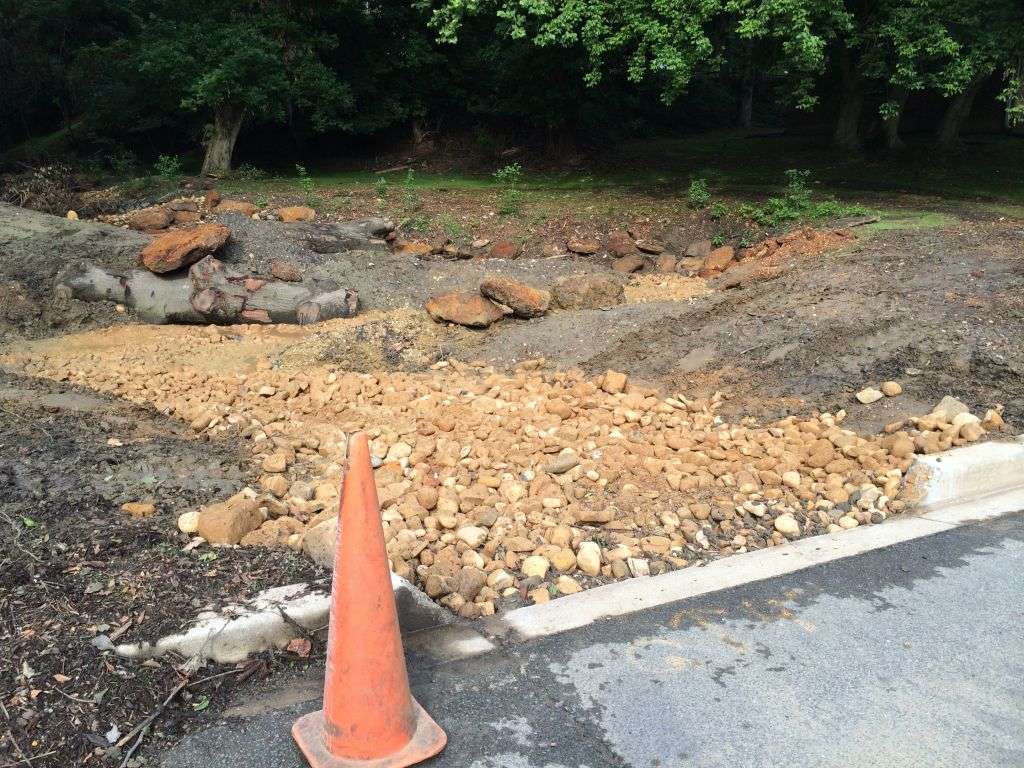
In addition to the stream daylighting, the project entailed
constructing three RSCs. RSCs are a type
of stream restoration technique that slows down, treats, and infiltrates
stormwater flows through the creation of pools and riffle-weir grade controls
that greatly reduce erosive forces and positively impact the ecology of a
drainage area.
Among the early successes for the project were improvements
to riparian habitat. The effort connected existing habitats and produced
several new vernal pools for a previously isolated spring that supports a
spotted salamander population. In addition to the in-stream habitat created,
the project removed invasive plants including bamboo, English ivy, Japanese knotweed
and tear thumb, replacing them with a mix of natives.
Monitoring was conducted both before and after restoration to
evaluate the efficacy of the RSC technique and may help resource managers to
better understand the role stream restoration can play in restoring our urban
waterways. The monitoring effort included
monitoring habitat, flows, stability, and pollutant removal efficiency for the
eight pollutants required to be monitored through the District’s Municipal
Separate Storm Sewer permit.
Overall, the last five years have seen both challenges and
improvements to the initial project. While it required a few repairs, the project
has held up well against a series of high intensity storm events in the District.
The most difficult issue has been keeping down invasive species and getting
plants established. The initial plan was for maintenance to be performed by
the local neighborhood group. While that worked for a while, the magnitude of
work has since exceeded the abilities of their volunteers. DOEE is now
moving to contract for a more consistent maintenance regime on this and all of their
projects.
The Linnean Creek and Broad Branch Project still functions
today as a learning opportunity for District residents. The site is now a
teaching tool used for field visits with students (pre-COVID-19). Project partners also installed photo
monitoring points at key locations throughout the project area. Visitors can take photos with their phones
and upload them to a photo sharing site where they will aid the District in
monitoring the site over time.
Latest Resources
View All ResourcesDeveloped by the Virginia Department of Conservation and Recreation, this design specification (updated 2013) provides guidance on disconnecting rooftop runoff...
Developed by the Virginia Department of Conservation and Recreation, this design specification (Version 1.9, March 1, 2011) provides guidance on...
Developed by the Virginia Department of Environmental Quality, this design specification (Version 2, 2013) provides guidance on using grass channels...