
Award Winner, 2025
Retrofitting Parkland to Restore District Waterways: Placemaking Through Partnership

Elaine Vidal – Department of Energy and Environment
Cecilia Lane – Department of Energy and Environment
Erica Carlsson – Department of Energy and Environment
Jim Woodworth – Department of Energy and Environment
Peter Norhden – Department of Parks and Recreation
Riley Piva – Department of Parks and Recreation
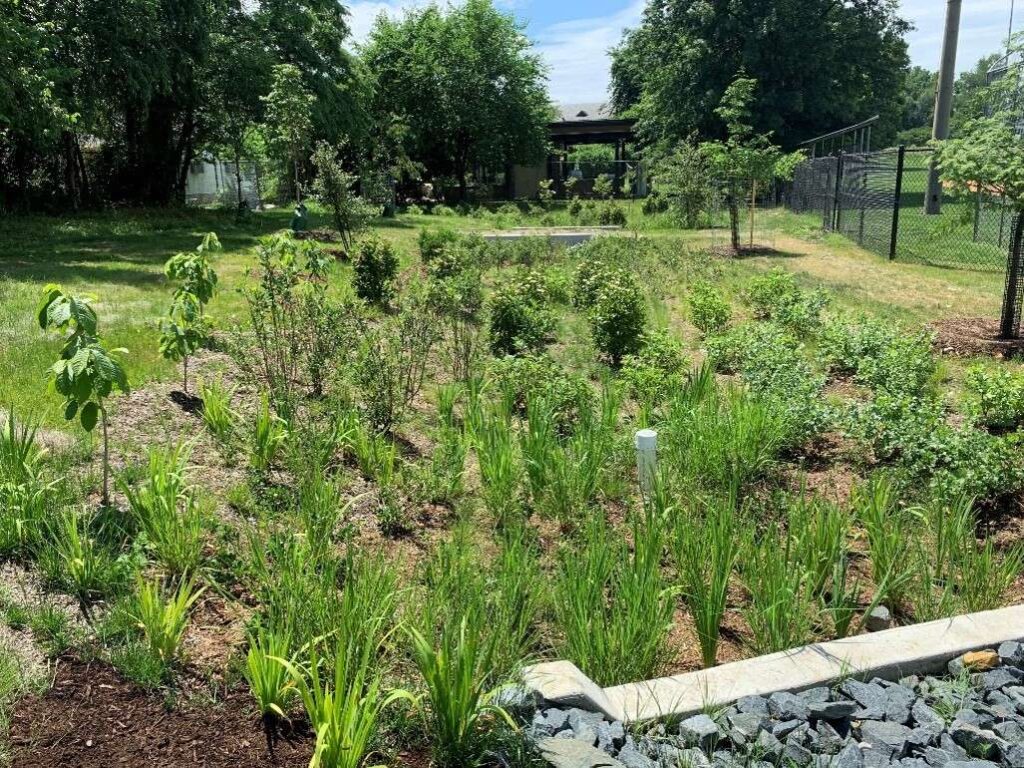
A park is a nexus of opportunities. As green gathering spaces for human and ecological communities, parks offer unique conditions to layer co-benefits that promote well-being. DC’s Parkland Stormwater Retrofit Program is a partnership that advances environmental stewardship, equity, pollution reduction, education, health, biodiversity, climate resilience, and aesthetic placemaking through the implementation of stormwater retrofits on District parkland. The goal of this program is to improve water quality in the Anacostia and Potomac rivers for the benefit of District residents, visitors, wildlife, and the environment, while providing high quality outdoor recreational space for people to learn, play, and connect with nature.
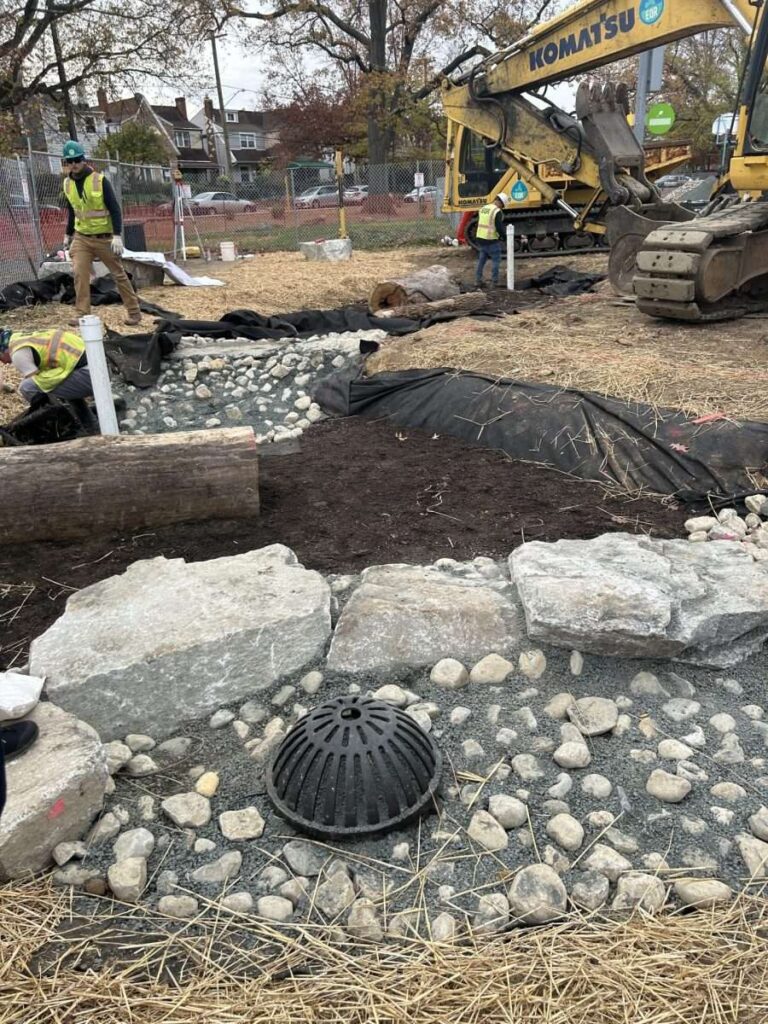
To accomplish this, the Department of Energy and Environment (DOEE) and the Department of Parks and Recreation (DPR) partnered to combine resources and achieve economies of scale which neither could accomplish alone. Working together to implement low impact development (LID) stormwater retrofits in District parks, DOEE provided technical expertise, matching funds, and maintenance while DPR provided land for project areas, technical expertise, and coordination support. The Parkland Stormwater Retrofit Program implemented its first retrofits at Congress Heights Recreation Center in 2019. Since then, the program has:
– Installed 23 BMPs at 11 parks (3 additional sites with 8 BMPs currently in design)
– Managed 67.58 acres of contributing drainage area, including 19.83 impervious acres
– Captured and treated approximately 607,448 gallons of stormwater per 1.2 inch rain event, or approximately 30 Olympic swimming pools per year
– Increased climate resilience by implementing BMPs with high retention capacity and biodiverse designs that provide habitat and mitigate urban heat island effect
– Provided environmental stewardship education and green workforce vocational training sites for District students, civic groups, non-profits, and returning citizens
– Integrated leading-edge technologies to pilot emerging tools and advance innovation, including stormwater chambers, biochar media, regenerative stormwater conveyance (RSC) systems, and a submerged gravel wetland.




Related Award Winners
View All Award Winners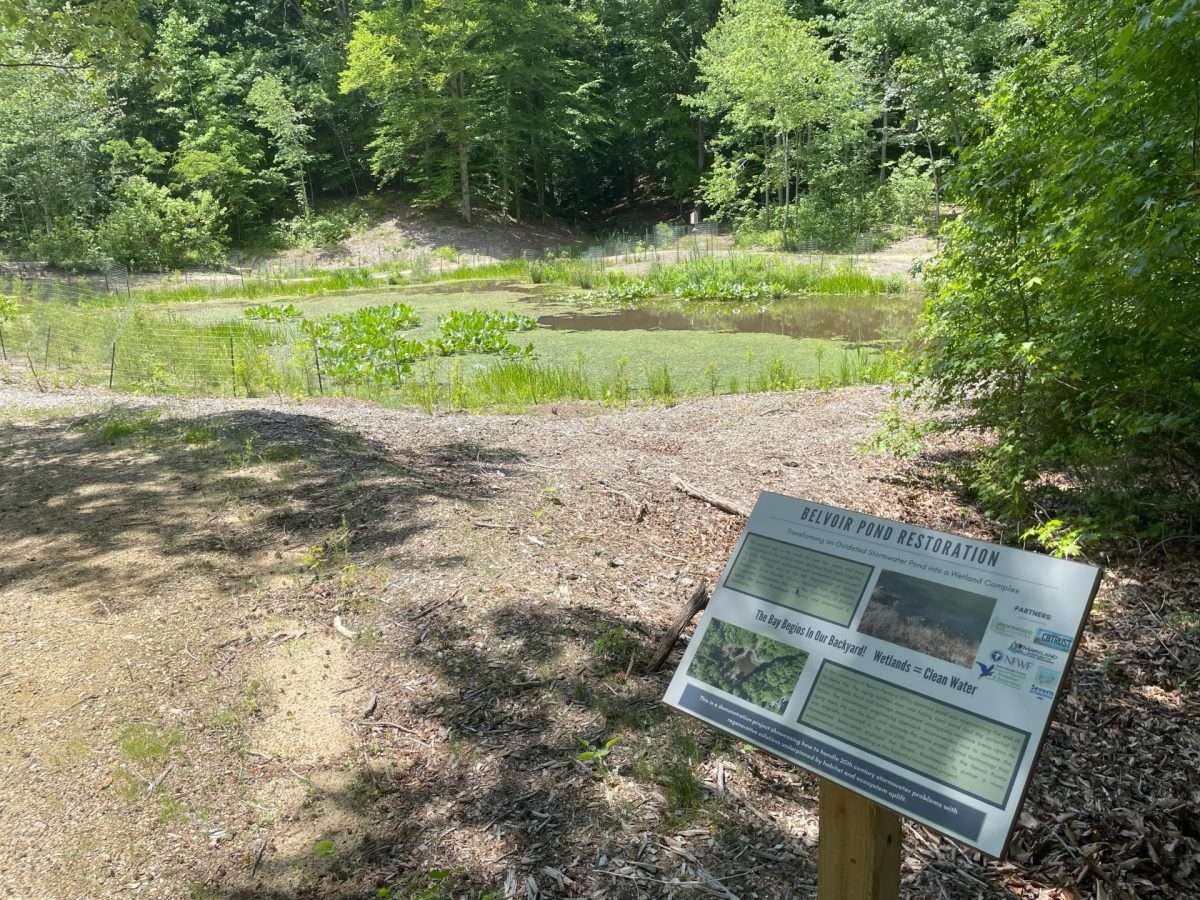
The Belvoir Farms Restoration Project in Crownsville, Maryland, was initiated by the community’s desire to transition outdated 20th-century piped stormwater...
Since the implementation of the Chesapeake Bay TMDL municipalities learned that stream restoration is the most cost-effective best management practice...
Beginning in 2016, Fairfax County began benthic macroinvertebrate monitoring in the fall at five (5) locations as part of the...