

Award Winner, 2025
Foragers’ Forest
Sarah Roth – Master’s degree alumna, George Mason University; Landscape Architect, Fairfax County Stormwater Planning Division
Doni Nolan – Greenhouse & Gardens Program Manager, George Mason University
Dr. Dann Sklarew – Environmental Science & Policy Professor, George Mason University
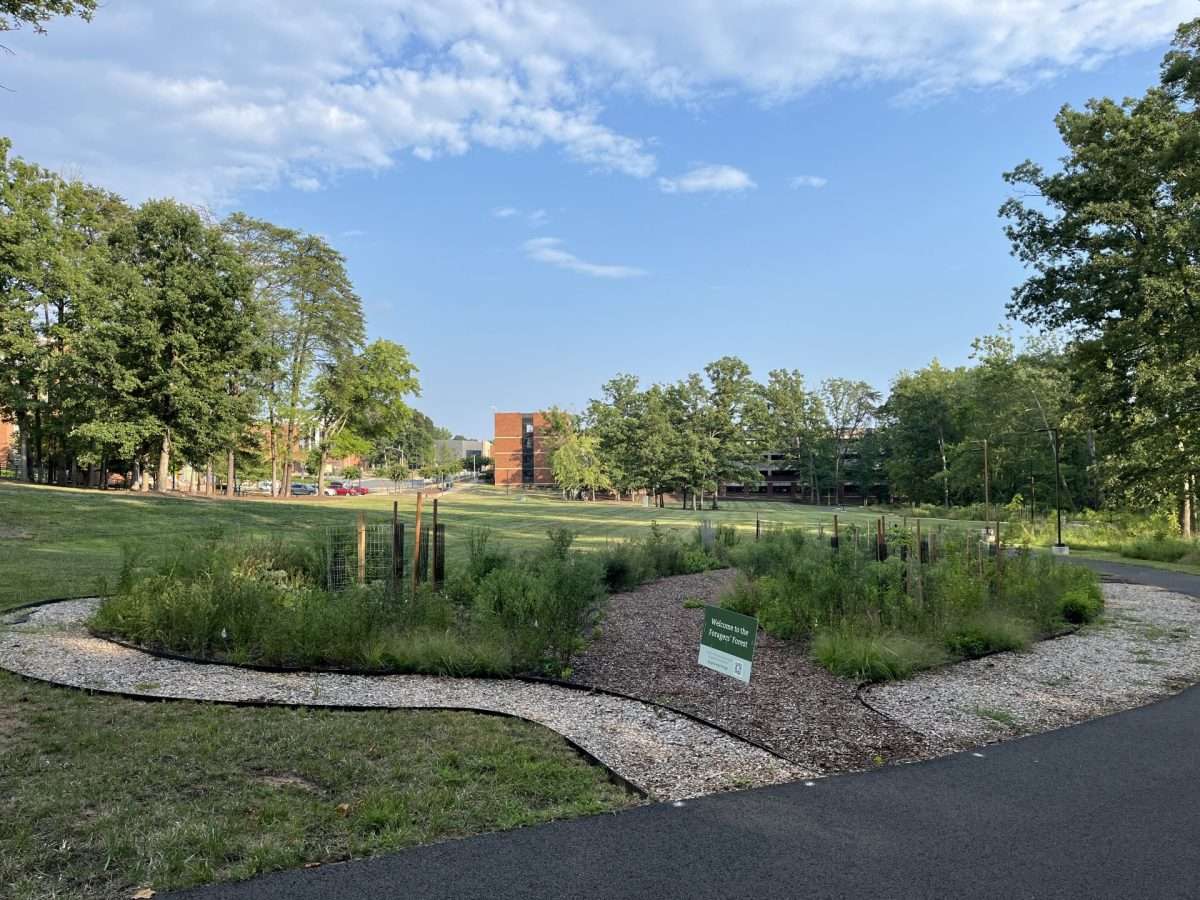
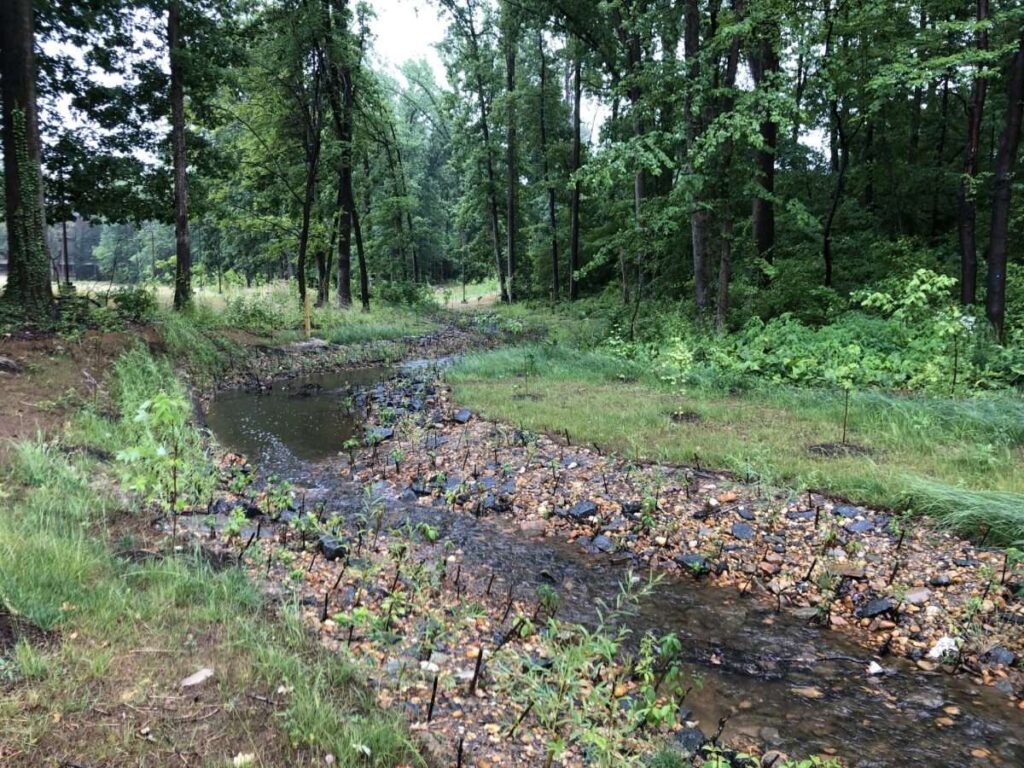
The Foragers’ Forest is a 100% native food forest located on George Mason University’s Fairfax campus. It consists of two groves – an overstory grove and a thicket grove – that cover 5,300 square feet and are planted with over 2,000 native trees, shrubs, grasses and wildflowers. The site features 26 edible and food-producing plant species, including blueberries, plums, hazelnuts and American chestnuts. The Foragers’ Forest is located just upland, and within the Resource Protection Area, of a restored stream on campus.
Our project team collaborated with community-based restoration leaders – including from Fairfax County, Earth Sangha and the Clifton Institute – for support designing and installing this project. The site absorbs significant stormwater from uphill. We committed to 100% native plants to support wildlife, enhance climate resilience, and rebuild ecological connections on campus.
Our mission is to highlight Virginia’s natural heritage and the diversity of edible and food-producing plants that are locally native. The Foragers’ Forest has also been designated a “Living Lab” to support outdoor-based research and education. As such, we have partnered with several professors and their students to collect data on phenology, biodiversity, and soil health at the site. We also offer “Foraging to Fork” events where we teach the community how and what to forage, using the site as an outdoor classroom. The site is also a service-hours-eligible volunteer site for the Fairfax Master Naturalists. We host volunteer events where students, faculty, staff, and master naturalists work together to plant, weed, and water the site until it is established. The most unique aspect of our project is that it is the first “Miyawaki food forest” in our region, and perhaps the United States. We used the Miyawaki method of reforestation to build this food forest, which means that we focused on locally native species and we planted very densely.


Related Award Winners
View All Award Winners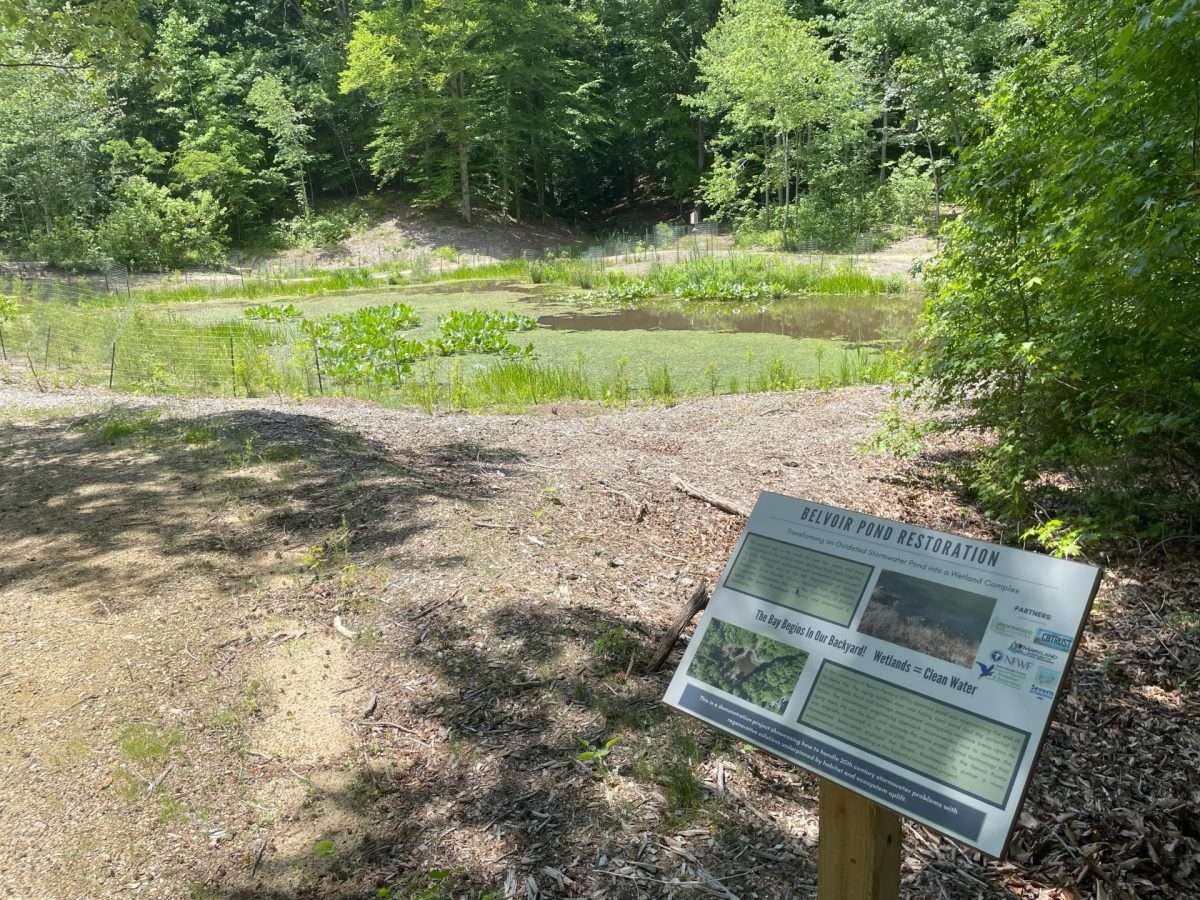
The Belvoir Farms Restoration Project in Crownsville, Maryland, was initiated by the community’s desire to transition outdated 20th-century piped stormwater...
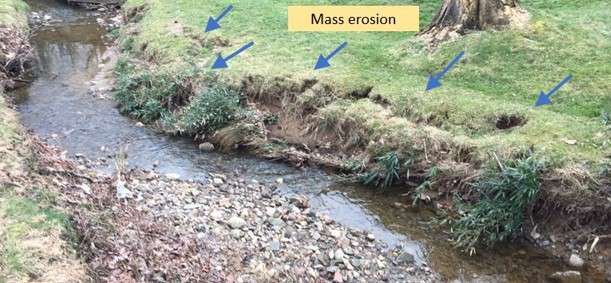
Since the implementation of the Chesapeake Bay TMDL municipalities learned that stream restoration is the most cost-effective best management practice...
Beginning in 2016, Fairfax County began benthic macroinvertebrate monitoring in the fall at five (5) locations as part of the...